
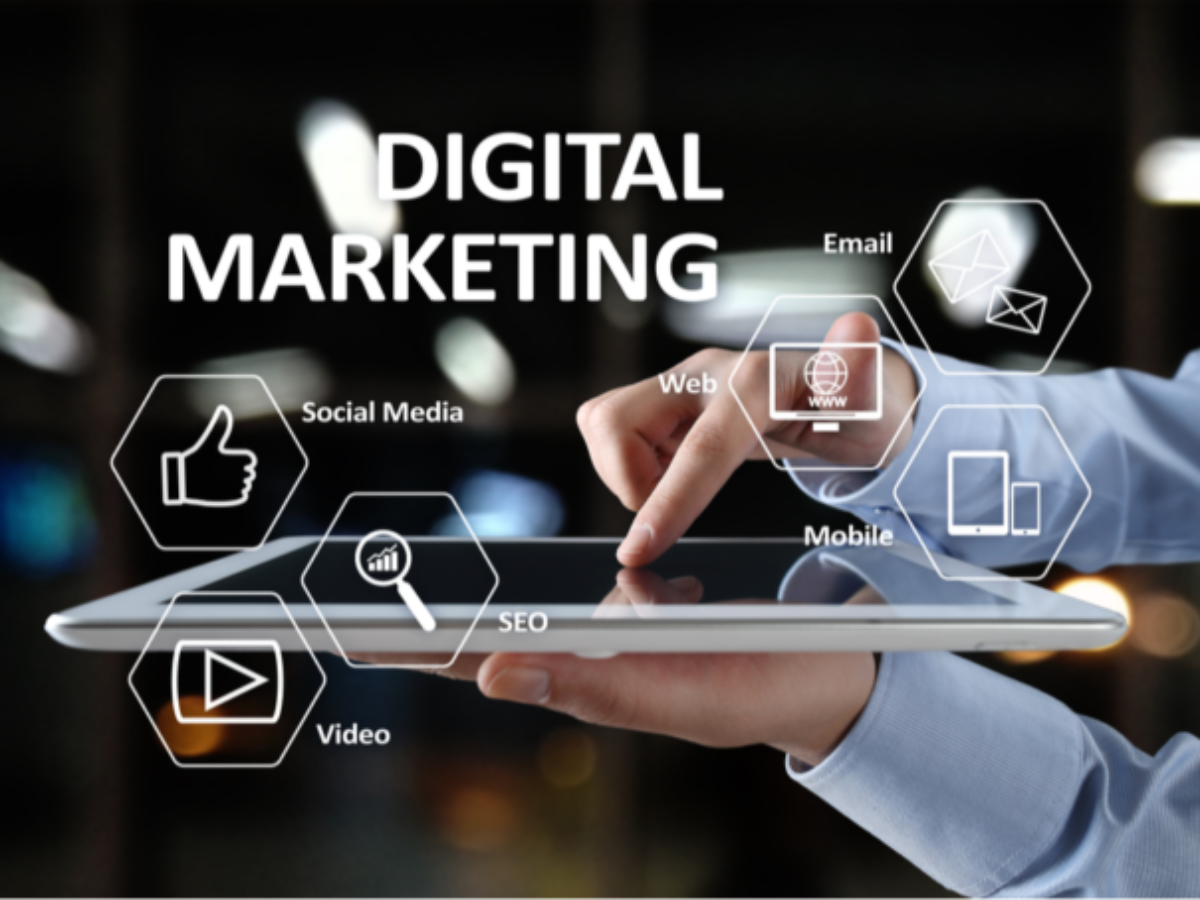
What Is Digital Marketing?
Digital marketing refers to the use of digital channels by a business or firm to sell or promote goods and services to customers. Digital marketing makes use of many websites, mobile devices, social media, search engines, and other platforms.
How Effective is Digital Marketing?
With the advent of digitization, it has been seen that the shopping throng in the marketplaces steadily diminished, and today it is seen that more and more people purchase online for themselves and their family. So, there are multiple benefits to advertising your company online since you want to reach the correct audience, and your audience is online.
Advantages of Digital Marketing
Customers of conventional marketing companies and departments have been significantly impacted by technological advancements. People have moved on to tablets, phones, and laptops, which are the areas where digital marketers have made the greatest progress.
The Evolution of Digital Marketing
The Digital Marketing Services era began with the introduction of the internet and the creation of the Web 1.0 platform. The Web 1.0 platform enabled users to locate information but not distribute it. Marketers all across the globe were still apprehensive about the digital platform up to that point. They were unsure whether their techniques would succeed since the internet had not yet been widely deployed.
Hot Wired bought a few banner advertisements after the first clickable banner went up in 1993. This marked the start of the marketing transfer to the digital age. Because of this slow transformation, new technologies entered the digital marketplace in 1994. Yahoo was started the same year.
Yahoo, sometimes known as “Jerry’s Guide to the World Wide Web” after its creator Jerry Yang, got almost 1 million visits in its first year. This spurred significant changes in the digital marketing field, with businesses tweaking their websites to get better search engine ranks
Google was established in 1998. Microsoft created the MSN search engine, while Yahoo introduced Yahoo online search. Two years later, the internet bubble burst, and all the smaller search engines were either left behind or wiped out, making room for the industry’s behemoths. The digital marketing sector had its first sharp increase in 2006, when search engine traffic was believed to have increased to around 6.4 billion in a single month. Not wanting to be left behind, Microsoft placed MSN on hold and built Live Search to compete with Google and Yahoo.
Then came Web 2.0, in which individuals became more active participants rather than passive users. Web 2.0 enabled users to communicate with other users and companies. Labels like’super information highway’ started to be attached to the internet. As a consequence, information flow volumes – including channels used by digital marketers – rose dramatically, and by 2004, internet advertising and marketing in the United States alone brought in over $2.9 billion.
Soon after, social networking sites appeared. MySpace was the first social networking site to appear, quickly followed by Facebook. Many businesses understood that the influx of new websites was opening up new avenues for marketing their goods and brands. It offered up new business opportunities and marked the start of a new era in business. With increased resources, they required new tactics to market their businesses and leverage on the social networking platform.
The cookie was another significant milestone in the digital marketing business. Advertisers have began to explore for additional methods to profit on the new technology. One such strategy was to monitor regular internet users’ general surfing activities and use patterns in order to personalize promotions and marketing assets to their preferences. The first cookie was created to track user behavior. The cookie’s use has evolved over time, and cookies are now programmed to provide advertisers with a number of methods to capture literal user data.
Digitally advertised products are now accessible to clients at all times. According to Marketing tech blog data from 2014, social media posting is the most popular online activity in the United States. The typical American spends 37 minutes each day on social media. To promote, 99% of digital marketers use Facebook, 97% use Twitter, 69% use Pinterest, and 59% use Instagram. 70% of B2C marketers have recruited consumers using Facebook. 67% of Twitter users are considerably more inclined to purchase from businesses they follow on Twitter. On Pinterest, 83.8% of luxury businesses have a presence. LinkedIn, Twitter, and Facebook are the three most popular social networking platforms among marketers.
Different Types of Digital Marketing
Some examples of digital marketing include:
Content Promotion
Content marketing is a sort of digital marketing that focuses on the development and distribution of content for a specified audience.
Search Engine Marketing (SEO)
Search Engine Optimization, often known as SEO, is the process of acquiring high-quality traffic through free, or organic, search engine results.
Search Engine Marketing (SEM)
“Search Engine Marketing” refers to both paid and free search traffic.
Social Media Marketing (SMM)
Simply simply, social media marketing is the practice of generating visitors and attention via social media platforms.
Affiliate marketing
Affiliate marketing is a common technique for individuals to generate money online these days.
Email Marketing
Email marketing is the practice of using email to advertise one’s goods or services.
Marketing Through Instant Messaging
Every month, 1.5 billion people worldwide use WhatsApp, followed by Facebook Messenger and WeChat. As a result, instant messaging marketing may help you be where your target customer is.
The digital market is in continual motion. A Digital Marketing expert must discover strategies to stay up with this transformation. They must be able to spot rising trends and the development of newer and better Search Engine Algorithms. After all, no one can afford to fall behind in this race.
Check out our Digital Marketing Course. Recognizing an opportunity, Google proceeded to grow, creating products such as AdWords, which are three-line advertisements that appear at the top or bottom of search engine results, and AdSense, which is a pay-per-click advertising program. Over time, Google discovered the importance of evaluating the information they received and then targeting adverts based on the interests of the users, and so became a key participant in the commercial world.
Conclusion
The key to corporate success is digital marketing agency. Using it in various ways allows the organization to improve revenue and clientele. Search engine marketing is the fundamental talent to utilize in the industry for optimizing several sites. Networking, efficacy, user experience returns on investment, search engine optimization, and connection everywhere. These are all the responsibilities of digital marketing in company improvement.
BrainSol Technologies offers the finest digital marketing services available. It is an IT firm that offers a wide variety of business solutions to businesses. Call us right now for an appointment.